I was a card-only spender for years. Then one August I looked at my checking account and couldn’t tell you where about $400 had gone — not to any one bad decision, just to a dozen small taps that never felt like spending in the moment. A friend suggested the cash envelope system, and I was skeptical. It felt like a step backward, like using a rotary phone. Three months in, I was a convert. Not because cash is magic, but because it makes spending physically visible in a way a card number never does.
This is a full walkthrough of how the cash envelope system actually works, how to set it up this week, a real monthly example with numbers, and the honest trade-offs — including who it doesn’t fit well.
Key Takeaways
- The cash envelope system splits your variable spending categories — groceries, gas, dining out — into physical cash, so each category runs dry when the money’s gone.
- Keep fixed bills (rent, utilities, loan payments) out of envelopes entirely. Cash envelopes work best for the categories where you actually make daily choices.
- A worked example: on a $4,200 take-home month, a typical envelope split runs $500 groceries, $200 gas, $150 dining out, $100 personal spending — about $950 in cash, with everything else staying in your bank account.
- Digital “envelope” apps replicate the same discipline without carrying cash, which is worth considering if physical cash isn’t practical for you.
- The system works because it removes a decision. You don’t have to remember your budget at the register — the empty envelope decides for you.
What the Cash Envelope System Actually Is
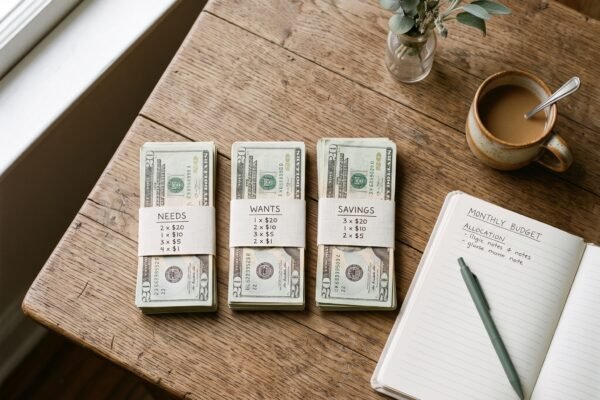
The cash envelope system is a budgeting method where you withdraw cash for your flexible spending categories and physically divide it into labeled envelopes — one for groceries, one for gas, one for dining out, and so on. When an envelope is empty, spending in that category stops until next payday. There’s no overdraft, no “I’ll catch up next month.” The cash itself is the limit.
It’s a specific application of zero-based thinking — every dollar gets a job before you spend it — but applied with physical friction instead of a spreadsheet. That friction is the entire point. Studies on payment behavior consistently find people spend more freely with cards than cash, partly because paying with a card doesn’t register as a loss the same way handing over bills does. The envelope system uses that psychology on purpose.
How to Set Up Your Cash Envelope System This Week
- Pick your flexible categories. Look at last month’s spending and find the categories where your total varies month to month and where you make repeated small choices — groceries, gas, dining out, entertainment, personal spending. Three to six categories is plenty to start.
- Set a realistic amount per category. Base it on what you actually spent last month, not an aspirational number. If groceries ran $550 last month, don’t fund the envelope at $350 and set yourself up to fail in week one.
- Withdraw the total in cash on payday. One trip to the bank or ATM, timed to when you get paid, keeps this simple instead of a constant chore.
- Divide it into labeled envelopes. Paper envelopes work fine and cost nothing. A dedicated cash envelope wallet keeps things organized if you’re doing this long-term (more on that below).
- Spend only from the matching envelope. Groceries come out of the groceries envelope, full stop. When it’s empty, you’re done spending in that category until the next withdrawal.
- Reset on your next payday. Whatever’s left rolls over or resets, depending on the category — leftover grocery cash is a nice cushion; leftover “dining out” cash is a good excuse to leave it in savings instead.
Which Categories Belong in Envelopes (and Which Don’t)
The system works best when you’re selective. Putting your entire budget into cash makes it heavy and impractical. The categories that benefit most from an envelope are the ones with two traits: they’re variable, and you make frequent small decisions inside them.
Good fits for cash envelopes:
- Groceries
- Gas
- Dining out / takeout
- Entertainment
- Personal spending / “fun money”
- Clothing
Keep these out of envelopes:
- Rent or mortgage
- Utilities and subscriptions
- Debt payments
- Insurance premiums
- Anything already automated
Fixed bills don’t need the friction of cash — they’re the same amount every month and there’s no decision to make at the point of payment. Save the envelopes for the categories where willpower actually gets tested.
A Real Worked Example
Here’s what this looks like with real numbers, based on a $4,200 monthly take-home income already following the 50/30/20 rule for the broad split:
| Envelope | Monthly Cash | Why It’s in Cash |
|---|---|---|
| Groceries | $500 | Highest number of small daily decisions |
| Gas | $200 | Predictable but easy to lose track of |
| Dining out | $150 | The category most people overspend without noticing |
| Personal spending | $100 | Guilt-free money that’s still capped |
| Total cash | $950 | About 23% of take-home pay |
Everything else — rent, the car payment, insurance, savings transfers — stays exactly where it already is: automated, out of cash, untouched by this system. You’re not converting your whole paycheck to bills in a shoebox. You’re isolating the ~20-25% of spending where a little friction actually changes behavior. If you want to see how this fits your specific numbers, the 50/30/20 budget calculator can help you find your starting split before you decide on envelope amounts.
Cash Envelopes vs. Digital “Envelope” Apps
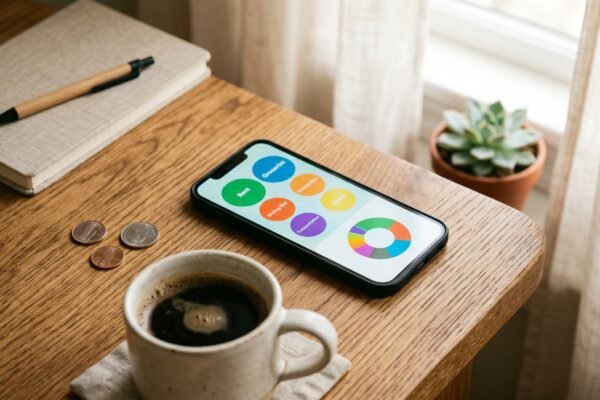
Carrying actual cash isn’t practical for everyone — some workplaces, some cities, some people just don’t want to walk around with a few hundred dollars. Several budgeting apps now offer a “digital envelope” or sub-account feature that mimics the same idea: you allocate a fixed amount to a virtual category and the app tracks it down to zero, without physical bills changing hands.
The honest trade-off: digital envelopes are more convenient and safer to carry, but they lose some of the psychological weight of physical cash. Handing over a bill and watching an envelope get visibly thinner hits differently than a notification. If you’ve tried a budgeting app before and still overspent in the same categories every month, physical cash is worth testing specifically because it works through a different part of your brain than a screen does.
Common Mistakes That Sink the System
- Underfunding envelopes on purpose. Setting a grocery envelope at $300 when you actually spend $500 isn’t budgeting, it’s setting up a mid-month failure. Fund it at your real number first, then work the number down over a few months.
- Borrowing between envelopes constantly. Moving cash from gas to dining out every week defeats the purpose. An occasional, deliberate transfer is fine; a habit of raiding envelopes means the categories are wrong, not that you lack discipline.
- Putting fixed bills in envelopes. This just adds inconvenience — bills that are the same every month don’t need cash friction, they need autopay.
- Never adjusting the amounts. Revisit your envelope totals every couple of months. Grocery prices change, gas prices change, and an envelope that was right in January can be wrong by summer.
- Treating leftover cash as “extra.” Money left in an envelope at the end of the month is a signal the budget for that category was generous — it’s not a bonus to blow before the next withdrawal.
What to Actually Use for Envelopes
Plain paper envelopes from a drawer work perfectly well, and that’s a completely legitimate way to start — don’t buy anything until you know the system sticks for you. If you do want something more durable, a dedicated cash envelope organizer keeps the categories from getting mixed together in a bag or wallet, which is usually where the DIY version breaks down after a few weeks.
Two well-reviewed options if you want a purpose-built system: Clever Fox’s reusable cash envelope set uses tear-resistant, water-resistant material and labeled categories, which holds up better than paper if you’re doing this long-term. For a cheaper paper-based starting point, Juvale’s 96-count budgeting envelopes come with a tracking ledger built in and cost about as much as one week of the “latte money” they’re meant to help you keep an eye on.
(As an Amazon Associate, I earn from qualifying purchases. See our affiliate disclosure for details.)
Is the Cash Envelope System Right for You?
It’s a strong fit if you’ve tried tracking spending in an app and it hasn’t changed your behavior, if you overspend specifically in a handful of variable categories rather than everywhere, or if you’re paying off debt and need every dollar in those categories to have a hard stop. It’s a weaker fit if you rarely carry cash for safety or workplace reasons, if your spending is already tight and automated, or if losing a physical envelope would be a real financial setback rather than a minor annoyance.
You don’t have to choose all-or-nothing, either. Plenty of people run one or two envelopes — usually dining out and personal spending, the two categories where cards do the most damage — and leave everything else automated. Start small, see if the friction actually works for your brain, and expand from there.
Frequently Asked Questions
Does the cash envelope system actually work?
For the categories it’s designed for — variable, frequent-decision spending like groceries and dining out — yes, and the effect is well-documented: people tend to spend less with physical cash than with cards, because handing over bills registers as a loss in a way tapping a card doesn’t. It works less well applied to your entire budget, which is why most people use it for a handful of categories rather than everything.
How much cash should I withdraw for envelopes?
Base it on what you actually spent in each category last month, not a number you wish were true. Add up your real grocery, gas, dining, and personal spending totals from your bank statement, fund the envelopes at that level to start, and trim them down gradually over a few months as the system starts changing your habits.
What if I run out of cash in an envelope before payday?
That’s the system working as designed — it means real spending in that category, not a failure on your part. You can borrow deliberately from a less-tight envelope if you choose to, but the better long-term fix is adjusting next month’s amount for that category so it matches what you actually need.
Is the cash envelope system safe?
Keep only what you’ll spend before your next withdrawal, not a large reserve, and store envelopes somewhere secure at home rather than carrying every category with you at once. If carrying cash doesn’t feel safe in your situation, a digital “envelope” feature in a budgeting app gives you the same spending caps without the physical bills.
Can I use the cash envelope system if I’m paying off debt?
Yes, and it pairs especially well with debt payoff, since it stops variable spending from quietly eating the extra money you meant to send toward a balance. Pair it with a clear payoff order — see our guides to the debt snowball and debt avalanche methods — so the money the envelopes free up has somewhere specific to go.
The cash envelope system isn’t a full budgeting philosophy on its own — pair it with a broader framework like the 50/30/20 rule or zero-based budgeting for the full picture, and use envelopes specifically for the categories where you’ve noticed money quietly disappearing. Start with two envelopes, not eight. If it changes how you spend for a month, you’ll know it’s worth expanding.
The Paystream shares information and frameworks to help you make your own decisions; it isn’t personalized financial advice. Product links on this page are affiliate links — see our affiliate disclosure for details.