The statement that finally broke me wasn’t the biggest one. It was the one where I did the math and realized that of the $87 minimum payment I’d been faithfully making, about $71 was going to interest. I’d been “paying off my credit card” for over a year, and the balance had barely moved. If you’ve ever felt that particular mix of frustration and embarrassment — doing the responsible thing every month and getting nowhere — I want you to hear this first: you are not failing. You’re playing a game where the default settings are designed for you to run in place.
Here’s the good news, and I mean this without a drop of hype: credit card debt is one of the most beatable problems in personal finance once you change the settings. After years of studying this, testing payoff strategies, and talking to people carrying balances they were ashamed of, I can tell you the way out is not a secret and not complicated. It’s a short list of moves, done in the right order, repeated until the balance says zero. In this guide we’ll walk through exactly that: how to see your full picture without panicking, which payoff order fits your brain, the accelerators that genuinely speed things up (and the ones that backfire), and what to do if all you can manage right now is the minimum. Real numbers, no shame, one clear next step at the end.
Key Takeaways
- Minimum payments are designed to keep a balance alive, not to pay it off — on a typical card, most of your minimum goes to interest, not the balance.
- Start by listing every card’s balance, APR, and minimum in one place, and pause new card spending while you pay down old balances.
- The debt avalanche (highest APR first) usually wins for credit cards specifically, because card rates are high enough that the math savings are real — but the snowball works too if you need early wins.
- The genuine accelerators are paying anything above the minimum, a carefully used 0% balance transfer, a phone call asking for a lower rate, and pointing a little extra income at one card.
- Even $50 above the minimum, automated every month, meaningfully shortens your payoff timeline — small and consistent beats big and abandoned.
- If you can’t cover the minimums, that’s a signal to call your card company and a nonprofit credit counselor — not a verdict on you.
Why Credit Card Debt Is So Hard to Pay Off
Let’s start by being honest about the opponent, because understanding it is what turns self-blame into strategy. Credit card debt isn’t hard to pay off because you’re undisciplined. It’s hard because it’s some of the most expensive debt ordinary people can hold, and because the payment structure quietly works against you.
The Minimum Payment Trap, By the Numbers
The average credit card APR (annual percentage rate — the yearly cost of carrying the debt) has hovered above 20% in recent years. Minimum payments are usually set at something like 1–2% of your balance plus that month’s interest. Run those numbers on a $5,000 balance at 24% APR and paying only the minimum can stretch the payoff past a decade and cost you more in interest than you originally borrowed. That’s not an accident of math. It’s the product doing exactly what it was built to do. If you want the exact mechanics of how issuers calculate that minimum — and what always paying just that number actually costs you — here’s the full breakdown of how minimum payments work.
Here’s the hard truth worth writing down: minimum payments aren’t a plan. They’re a subscription to your own debt.
It’s Not a Willpower Problem
The other reason card debt lingers is psychological, and I say this as someone who lived it. A balance you’re ashamed of is a balance you avoid looking at, and a debt you won’t look at is a debt you can’t attack. So before any tactics, give yourself the reframe you actually deserve: the balance is a situation, not a character flaw. Situations respond to systems. That’s what we’re building, the same way I laid out in my step-by-step plan for getting out of debt — this guide zooms that plan into credit cards specifically, because cards deserve their own playbook.
Step 1: Get the Full Picture of What You Owe
You can’t out-strategize a number you refuse to see. So tonight — not someday, tonight — gather every card and write down four things for each one:

- The card name (including store cards and that one you forgot about)
- The current balance
- The APR — it’s on your statement, usually in a table near the end
- The minimum payment
Ten minutes, one page. I won’t pretend this part feels good, but I can tell you from experience that the number on paper is almost always less terrifying than the one your imagination has been inflating at 2 a.m. And once it’s on paper, something shifts: it stops being a cloud of dread and becomes a list of targets, in an order you’re about to choose.
Step 2: Stop Adding While You Subtract
Paying down a card you’re still swiping is like bailing a boat with the drain open. So two moves before the payoff starts.
First, pause the cards. Take them out of your wallet, delete them from the saved-payment screens of your favorite stores, and switch daily spending to your debit card. This isn’t forever — it’s just while you’re in payoff mode. You don’t have to be perfect here. You just have to stop adding to the pile faster than you’re shrinking it.
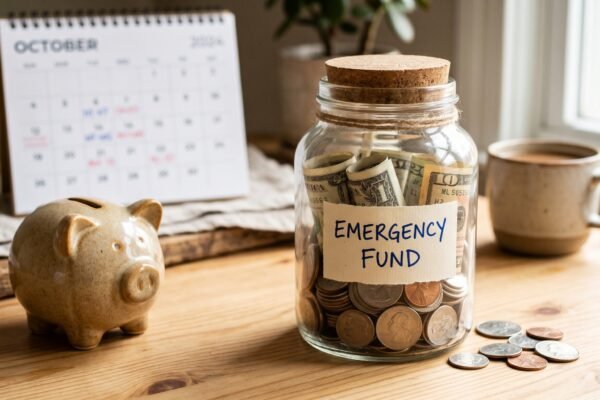
Second — and this feels backwards, but it’s load-bearing — put a small buffer between you and the next emergency. If you have zero savings, the next car repair goes straight back on the card and takes your morale with it. A starter emergency fund of $500–$1,000 is enough to absorb most surprises. If saving anything feels impossible right now, my guide to building an emergency fund on a tight budget walks through it $10 at a time, and I mean that literally.
Step 3: Pick Your Payoff Order (Avalanche vs. Snowball)
The engine of every payoff plan is the same: pay the minimum on every card, then send every extra dollar you can find at one target card until it hits zero. Then roll that card’s entire payment onto the next target. The only decision is the order — and for credit cards specifically, I’ll give you a more opinionated answer than usual.
Why the Avalanche Usually Wins for Credit Cards
The debt avalanche targets your highest-APR card first. The debt snowball targets your smallest balance first. In a mix of debts with mild interest rates, I often steer people toward the snowball method because motivation is worth more than math. But credit cards change the calculus: when everything you owe is charging 19–29%, the gap between your highest and lowest rate is real money, and the avalanche’s savings stop being theoretical. If your card APRs span more than a few points, the avalanche is usually worth the patience.
When to Choose the Snowball Anyway
If you’ve started payoff plans before and abandoned them, or one small balance is cluttering your head, take the snowball — without guilt. A plan you finish beats a plan you optimize. Both orders retire every card; they just sequence the wins differently.
| Avalanche (highest APR first) | Snowball (smallest balance first) | |
|---|---|---|
| Best for cards when… | APRs vary widely (e.g., 18% to 29%) | You need a fast win to stay in the game |
| What you gain | The least total interest, fastest finish | Momentum and fewer bills sooner |
| What it costs | First zero may take months to arrive | Somewhat more interest paid overall |
| My take | Default choice for credit card debt | The right call if quitting is the risk |
How to Pay Off Credit Card Debt Fast: The Four Real Accelerators
“Fast” is the word everyone searches, so let me be straight about what it means: not thirty days, and not painless. What these four moves genuinely do is compress a payoff from feels-endless to has-a-date. In my experience they’re the difference between a five-year slog and an eighteen-month project.
1. Pay More Than the Minimum — Any Amount, Automated
This is the whole ballgame. Every dollar above the minimum attacks the principal — the actual balance — instead of vanishing into interest. Even $50 extra a month, automated on payday so you never have to re-decide, can cut years off a payoff. Find that $50 the unglamorous way: the big recurring costs, not the small joys. I’m not going to tell you to skip lattes — that’s both condescending and mathematically useless. Shop your insurance, audit your subscriptions, downgrade the phone plan. Here’s exactly where the real money hides.

2. Use a 0% Balance Transfer — With Your Eyes Open
A balance transfer card gives you a 0% introductory APR window — often 12–21 months — where every dollar you pay goes straight at the balance. That’s a genuinely powerful head start, with three honest caveats. There’s a transfer fee, usually 3–5% of the amount moved. You’ll generally need fair-to-good credit to qualify. And the window ends: if the balance is still there when the regular APR kicks in, you’re back where you started minus the fee. The test is simple — divide the transferred balance by the number of 0% months. If you can realistically pay that much monthly, the transfer is a tool. If not, it’s a delay dressed up as a plan.
3. Make the Phone Call Almost Nobody Makes
Call your card company and ask for a lower rate. Say you’ve been a customer for years, mention the offers you’re seeing elsewhere, and ask directly: “Can you lower my APR?” Surveys consistently find that a majority of people who ask get a reduction — and almost nobody asks. Fifteen awkward minutes for a rate cut that works every month afterward is the best hourly wage in personal finance. While you’re at it, ask whether they offer a hardship plan if money is genuinely tight.
4. Point a Little New Income at One Card
Cutting expenses has a floor; earning has no ceiling. An extra $150–$300 a month aimed entirely at your target card — walled off from everyday spending, one job only — changes a timeline dramatically. If you’re not sure where that could come from, start with these realistic side hustles or honest ways to make money online — no gurus, no overnight promises.
“A credit card balance is a situation, not a character flaw. Situations respond to systems.”
A Worked Example: Paying Off $6,000 Across Three Cards
Numbers make this real, so meet a composite of a lot of people I’ve talked to. Three cards: a $2,800 balance at 26.99% APR (minimum about $75), a $1,000 store card at 21.99% (minimum $30), and a $2,200 balance at 18.99% (minimum $58). Total: $6,000 of debt and about $163 a month in minimums that are mostly feeding interest.
Now run the plan. She finds $130 by trimming recurring bills and adds $120 from a few hours of weekend freelancing — $250 extra, automated. Using the avalanche, all $250 lands on the 26.99% card while the others get minimums. The first card dies in under a year; its whole payment then rolls onto the store card, which falls in weeks; everything then piles onto the last card. Total time to zero: roughly a year and a half, with somewhere around $900 in total interest — versus a minimums-only path that would have dragged on for well over a decade and cost several times that. Same income, same debt, different settings.
What If You Can Only Manage the Minimums Right Now?
Some months, and some seasons of life, there is no extra $250 — and if that’s you, this section is yours. First: covering your minimums on time is not nothing. It protects your credit and keeps every account in good standing while you stabilize. If even the minimums are slipping out of reach, act early, because your options are better before you miss payments than after. Call your card companies and ask about hardship programs — reduced rates or payments for a set period. Then talk to a nonprofit credit counselor (look for agencies affiliated with the National Foundation for Credit Counseling); a free session can lead to a debt management plan that consolidates your cards into one payment at reduced rates. If an account is already past due or a collector is involved, it’s worth understanding how credit card debt forgiveness actually works before assuming settlement is your only option. And if a card has already gone to a charge-off, that’s a separate, more specific problem with its own three-route fix — see how to remove a charge-off from your credit report. And if your budget has never had room to breathe in the first place, start with my guide to budgeting on a low income — it’s written for exactly this situation, without a shred of judgment. Asking for help is a strategy, not a surrender.
You Hit Zero. Here’s How You Never Come Back.
The strategies that get you out are only half the job; the guardrails keep you out.

Keep the paid-off cards open. Closing them shrinks your available credit and can ding your credit score by raising your utilization. Let them sit, or put one small recurring bill on each and autopay it in full.
Switch to paying in full, automatically. Set every card to autopay the statement balance. The grace period means a card paid in full each month charges you nothing — that’s the version of credit cards that works for you.
Redirect the payment you already proved you could make. You’ve spent months sending $250 (or $50, or $400) somewhere on purpose. Don’t let it dissolve back into spending. Point it at finishing your full emergency fund, then at savings goals. And give the predictable budget-wreckers — car repairs, holidays, annual bills — their own sinking funds so they never land on a card again. The behavior that cleared your debt is the same one that builds your cushion. You’re just changing the destination.
See your own debt-free date. Put your real balance, APR, and monthly payment into the free credit card payoff calculator — it shows your payoff date, the total interest, and exactly how much sooner you’d finish with a little extra each month.
Want more guides like this? Subscribe to The Paystream’s newsletter for practical credit and money guides sent when they publish — no spam, unsubscribe anytime.
Frequently Asked Questions
What is the best way to pay off credit card debt?
For most people with credit cards specifically, the best way is the avalanche method: pay the minimum on every card, then send every extra dollar at your highest-APR card first. Because card rates typically run 18–29%, the highest-rate card is costing you the most every single day it carries a balance, so paying it down first saves the most money and finishes fastest in total. The exception is if you’ve abandoned payoff plans before — in that case, the snowball method (smallest balance first) trades a little extra interest for an early win that keeps you motivated. Either way, “best” means the plan you’ll actually finish, paired with paying more than the minimum.
What is the fastest way to pay off credit card debt?
Combine four moves: pay as much above the minimum as you can (automated), target your highest-APR card first with the avalanche method, lower the interest itself — via a 0% balance transfer you can clear within the promo window or a phone call requesting a rate reduction — and add a small stream of extra income pointed entirely at one card. Together these routinely turn a decade-long minimum-payment slog into a payoff measured in months.
Is it better to use the snowball or avalanche for credit cards?
For credit cards specifically, the avalanche (highest APR first) usually wins, because card interest rates are high enough that targeting the most expensive card saves real money. Choose the snowball (smallest balance first) if you’ve abandoned payoff plans before and need an early win to stay motivated — the best method is still the one you’ll finish.
Are balance transfer cards worth it?
They can be, if three things are true: the transfer fee (typically 3–5%) is smaller than the interest you’d otherwise pay, you can realistically pay off the balance within the 0% window, and you won’t run new charges on the old, now-empty card. Divide the balance by the number of promo months — if you can afford that monthly payment, the transfer is a genuine accelerator.
Will paying off my credit cards raise my credit score?
Usually, yes — often noticeably. Paying down balances lowers your credit utilization (the share of your available credit you’re using), which is one of the biggest factors in your score. Keep paid-off cards open, since closing them reduces available credit and can push utilization back up. Expect improvement over a few statement cycles rather than overnight.
Should I pay off credit card debt or save money first?
Do a small amount of both, in order. Build a starter emergency fund of $500–$1,000 first so the next surprise expense doesn’t go straight back on a card, then attack the card debt hard — at 20%+ interest, it’s costing you far more than savings can earn. Once the cards are at zero, build your full three-to-six-month emergency fund.
What happens if I can’t even make the minimum payments?
Act before you miss a payment if you can. Call your card companies and ask about hardship programs, which can temporarily reduce your rate or payment. Then contact a nonprofit credit counseling agency — the initial session is typically free, and a debt management plan can consolidate your cards into one lower-rate payment. Missing payments without calling is the most expensive version of this situation, and you have more options than it feels like right now.
I know how heavy a credit card balance can feel — not just the number, but the way it hums in the background of every purchase, every paycheck, every “we should really talk about money” conversation you keep postponing. So let me leave you with the truth I wish someone had handed me: this is a solvable problem, people solve it every day on ordinary incomes, and none of them did it with willpower alone. They did it with a list, an order, and an automatic payment that kept showing up. Your whole assignment for tonight is the list: every card, every balance, every APR, every minimum, on one page. Ten minutes. Don’t fix anything yet — just look. Tomorrow, we pick the first target. You can absolutely do this, and I’m here for every step of it.
The Paystream shares information and frameworks to help you make your own decisions; it isn’t personalized financial, legal, or tax advice. For guidance specific to your situation — especially if your payments feel unmanageable — consider speaking with a nonprofit credit counselor or a qualified professional.